The Age-Well Project

Change the way you age

Get our posts direct to your inbox

Search

  • About The Age-Well Project
  • Books
    • Our Books
    • Reviews
    • References
  • Blog
  • Recipes
    • Recipes By Ingredient
    • Breakfast
    • Dessert
    • Dinner
    • Drinks
    • Family
    • On The Go
    • Soups and Salads
    • Treats and Snacks
  • Contact
  • Events
  • Press

Is this the world’s best longevity diet?

August 1, 2025 Leave a Comment

Move over Medi – there’s a new heritage diet in town. It’s from Tanzania, and I’m very lucky to have just visited that glorious country. So I was fascinated to read new research naming the diet of northern Tanzania as one of the healthiest in the world.

Researchers from the Netherlands and Tanzania evaluated the diet traditionally eaten by arable farmers in the foothills of Mount Kilimanjaro. They consume many fibrous, polyphenol-rich plants and a fermented banana beer called mbege. Fibre intake can be up to 90g a day, three times more than that recommended here in the UK. And Brits only average around half that amount. The fibrous Tanzanian diet has a hugely beneficial impact on gut health, and is linked to better immunity and reduced inflammation.

POP-UP KITCHENS

To assess the benefits of the diet, the researchers conducted a neat experiment where they established pop-up kitchens in the foothills of Kilimanjaro and in the capital, Dar-es-Salaam. For two weeks the urban kitchen served meals of cassava, plantains, beans, green vegetables and mbege to study participants used to a Western-style, ultra-processed diet.  Meanwhile, the rural kitchen dished out pizza, chips, fried chicken and beef stew with pasta. Participants in the study used to the traditional diet saw inflammatory markers in their blood increase, and their responses to infection decrease, when they swapped to the western diet. They also gained weight. In contrast, those who switched from a modern diet to a traditional one saw inflammation, and blood markers linked to metabolic syndrome, decrease.

If you’d like to know more about the study’s findings, there’s a great Zoe podcast about it, with Tim Spector and the Dutch lead author Dr Quirijn de Mast, which you can find here.

On our trip to northern Tanzania, were weren’t offered mbege – sadly – I’d like to try it! But we did eat huge amounts of locally-grown spinach, which was rich, fibrous stuff, more like kale than the pappy baby spinach we buy in the supermarket at home. We also had lots of bean and lentil dishes. Most meals started with soup and salad – nourishing, hydrating and blood-sugar balancing.

HERITAGE DIETS

So why do we know so much about the Mediterranean diet and so little about the Tanzanian one? The Mediterranean diet has been so well studied and documented over the last 60 years or so, that it’s easy to think that it’s the ONLY diet associated with longevity. I’ve had coaching clients in India worry that they’re not following the Medi diet closely enough, only to realise that in fact their own traditional diet is exceptionally healthy. So perhaps it’s time to look past the Medi diet – good though it is – and seek inspiration from heritage diets worldwide.

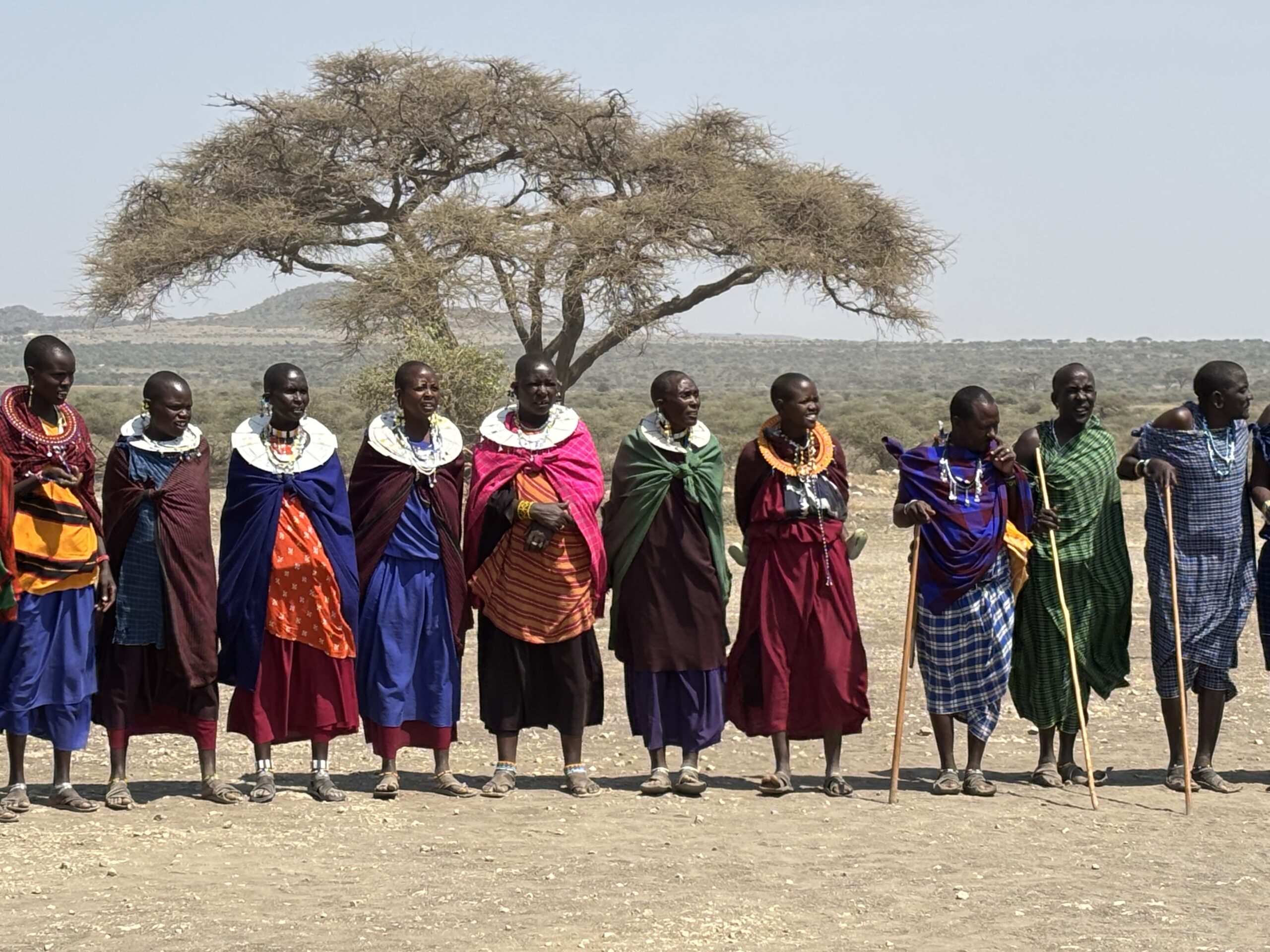
One traditional diet I suspect few of us would want to follow is that of the Maasai, nomadic tribespeople who live in the north-west of Tanzania and southern Kenya. We were lucky enough to visit a village in the Serengeti – pictured above, with their permission. Of course, I had lots of questions for our guide about diet and longevity. Their diet couldn’t be more different to that studied by Dr Quirijn de Mast and his team.

MILK, MEAT AND BLOOD

The Maasai are pastoralists, tending herds of goats and cattle as they move between villages across region. They don’t grow crops and, as a result, their diet is based on milk, meat and blood. Our guide told me that his first two meals each day are usually a mix of cows’ blood and goats’ milk. I can’t imagine what that tastes like. The evening meal consists of a maize porridge called ugali, and beef stew. Roots and tree bark are eaten as medicine rather than food. Heavy in saturated fat and cholesterol, it doesn’t fit our idea of a ‘healthy’ diet, but the Maasai have low rates of heart disease, high blood pressure and diabetes. Why? They have genetic adaptations that enable efficient cholesterol metabolism and regulation, as well as a lifestyle that involves walking for up to 10 hours a day.

The chief of the village we visited is 97 years old, so something must be working!

RELATIONSHIPS, AND RECIPES

We’re taking our usual summer break for the rest of August. If you’d like something to listen to in the meantime, I talked to Lucy Cavendish on her podcast, How to Have Extraordinary Relationships, about our relationship with our brains. It’s the most important one we’ll ever have.

If we don’t take care of our brains – and make brain health a priority – we’re doing ourselves a fundamental disservice, as well as increasing our risk of cognitive decline.

Listen wherever you get your podcasts, or right here How to Have Extraordinary Relationships

And here are some of our favourite seasonal recipes from the archive to help you age well this summer:

Avocado summer soup

Sweet paprika salmon

Sweet and sour cherry bowl

BBQ’d fish tacos

Kale Caesar salad 

Roast vegetable frittata with walnut sauce 

Prawn, pea and pepper paella 

Very berry lollies

The healthiest-ever ice cream

Susan

« HOW MANY STEPS SHOULD WE – REALLY – BE WALKING?
PERFECT JOY, SUPPLEMENTS AND SARDINES »

Leave a Reply Cancel reply

Your email address will not be published. Required fields are marked *

This site uses Akismet to reduce spam. Learn how your comment data is processed.

  • Email
  • Facebook
  • Instagram
  • Twitter

Welcome to The Age-Well Project

Welcome to The Age-Well Project!
Here you’ll find easy changes for a longer, happier life. We’ve immersed ourselves in the science of longevity and distilled the research to make it work in our everyday lives. You can change the way you age: here’s how.

The Age Well Project Book
The Age Well Project Plan
Windswept why women walk
52 ways to walk
the power decade
sleepless
the walking cure

Favourite Posts

WHY I’VE THROWN OUT ALL MY BEAUTY PRODUCTS (nearly…)

Why Alzheimer’s Is A Women’s Issue

HOW HAVING A DOG CHANGED MY LIFE

GREEN SPACE IS GOOD FOR YOUR HEALTH

SUGAR, CHOCOLATE, SADNESS AND BRAIN-BOOSTING BISCUITS

WHY ‘INFLAMM-AGEING’ COULD START IN THE GUT AND HARISSA-ROASTED VEGETABLE SALAD

POLYAMINES – THE NEW SECRET WEAPON FOR AGEING WELL & MOROCCAN SPINACH AND CHICKPEAS.

THINNING AGEING HAIR – WARM CHICKEN LIVER SALAD

About The Age Well Project

This site is for anyone who wants to make the second half of their life as healthy, happy and disease-free as possible. Sign up to get the latest research on ageing – and delicious recipes to match – direct to your inbox.

agewellproject

⭐️Change the way you age
📚The Age-Well Project + Age-Well Plan ⭐️Get tips & recipes on our blog - sign up ⬇️

And a belated ‘merry everything’ from us! We hope And a belated ‘merry everything’ from us! We hope you had a marvellous Christmas, and 2026 will be a year of ageing well. There’s a new post on the blog about - among other things - art, peanuts and Dick Van Dyke. Lots of thoughts on longevity for these last days of the year. Linked in stories and on agewellproject.com
How much should we worry about digital dementia? How much should we worry about digital dementia? 

The term isn’t new. It was coined by German neuroscientist and psychiatrist Dr. Manfred Spitzer in 2012.

He argues that outsourcing memory to search engines, the constant ‘pings’ of notifications, and multitasking, can weaken memory consolidation and reduce attention. He also suggests this can lead to a decreased ability for deep thought, reduced self-control, and  social issues.

How can we protect the brain? Research published a few weeks ago found engaging in creative pursuits, like dance, music or visual arts, is associated with a measurable slowing of brain ageing. You’ll have heard this before, but what’s interesting in this study is that the research team looked at how this might happen.

There’s more on the blog agewellproject.com and linked in stories

#agewell #longevityblog #womenover50 #womenover60 #dementia
Annabel’s just spent a month working and walking i Annabel’s just spent a month working and walking in the Swiss Alps. So that meant a lot of time climbing a lot of mountains! 

Unsurprisingly, she found herself drawn to the latest studies of movement. She wanted to know what all the uphill huff and puff was really doing, not to mention the downhill drag on knees and limbs, and the slipping and sliding through mud and snow. 

It’s all on the blog - agewellproject.com and linked in stories 

#agewell #longevityblog #womenwhowalk
We’ve been very remiss about telling you that ther We’ve been very remiss about telling you that there are some fascinating new posts on the blog - from the quest for immortality to the power of yoghurt to help us age well. 

And from profound questions about who gets access to the cutting edge longevity technology to the secrets of the world’s longest lived woman, we’ve been trawling the latest research on ageing well, so you don’t have to.

Find us, as always, at agewellproject.com whenever you want a deep-dive into what’s really going to make a difference to your longevity

#longevity #agewell #ageingwell #agingwell #womenover50 #over50andfit #womenover60 #postmenopause #postmenopausalwomen #healthblog #longevityblog
The latest research into omega-3 fatty acids, supp The latest research into omega-3 fatty acids, supplements and joy 🥳all on the blog now 

Find it, as always, agewellproject.com or at the link in bio 

#longevity #agewell #ageingwell #agingwell #womenover50 #over50andfit #womenover60 #postmenopause #postmenopausalwomen #healthblog #longevityblog
Follow on Instagram

Contact Us

For any enquiries please email theagewellproject@gmail.com.

Copyright © 2026 The Age-Well Project