The Age-Well Project

Change the way you age

Get our posts direct to your inbox

Search

  • About The Age-Well Project
  • Books
    • Our Books
    • Reviews
    • References
  • Blog
  • Recipes
    • Recipes By Ingredient
    • Breakfast
    • Dessert
    • Dinner
    • Drinks
    • Family
    • On The Go
    • Soups and Salads
    • Treats and Snacks
  • Contact
  • Events
  • Press

IS IT POSSIBLE TO REVERSE GREY HAIR?

April 4, 2025 4 Comments

I’ve written before about my early greying – and I do mean early, I found my first grey hair at 16. More recently I’ve come to terms with my ‘silver sparkles’, after years of dyeing them away. Technically, there’s no such thing as ‘grey’ hair. What we see as grey is a mixture of translucent, pigment-less hairs and what’s left of our natural hair colour. The pigment-less hairs appear to be white as they reflect full-spectrum light.

The pigment that gives our hair its colour is produced in follicular stem cells. When that production process is halted, we’re left with hair that is simply colourless. So any treatment or supplement that keeps the pigment production line rolling could potentially turn the clock back on millions of heads of hair.

Less grey hair

So I was intrigued by a study published in February linking an antioxidant found in many vegetables to decreased greying. The Japanese study, in the journal Antioxidants, treated mice who’d been created to develop grey hair. They were given internal and external treatments with one specific antioxidant, luteolin. The mice were given a supplement, and a solution of luteolin was applied to their fur, daily for 16 weeks. Both topical application and supplementation had an effect, although topical application had the greater one, with a substantial reduction in greying the result.  Luteolin helps maintain communication between the stem cells needed for pigment production, the research team believe.

It’s possible to buy luteolin supplements – like the ones the mice were given. And it’s found in some high-end skincare products, particularly those that deal with skin ageing and inflammation. Luteolin may also help protect against UV-induced skin damage and promote wound healing.

Luteolin

Luteolin is found in herbs including oregano, thyme, rosemary and camomile. Most accessibly, it’s found in multiple vegetables – the richest sources are radicchio, green peppers, celery, parsley, broccoli. All of which I eat regularly. I’ve listed at the end of this post some recipes from the Age Well archive which include these ingredients. I pretty much LIVE on vegetables. As my brain health coaching clients will tell you, one of my mantras is ‘start meal planning with the vegetables first’. The base of every meal for me is non-starchy, brightly-coloured vegetables.

Vegetables first

We tend to think about the protein or carbs first, rather than vegetables, when we meal plan. We think ‘I’ve got some chicken in the fridge, let’s use that’ or ‘it’s pasta night’ but I encourage you to focus on vegetables first. You’re aiming for 6-9 portions a day. When you meal plan, ask yourself, where’s the colour? Where’s the green? We can see the antioxidants in vegetables, they’re the bright colours and they protect us from oxidative stress (a process akin to rusting!)

All that veg hasn’t stopped my hair turning grey. And, honestly, I like my hair. What is more compelling however, is research linking the antioxidant luteolin to brain health. Research published in 2016 linked supplementation with luteolin to reduced neuroinflammation and better cognition during ageing. Something that’s incredibly important to me, as the daughter and granddaughter of dementia. A 2010 study of healthy aged mice found improved learning and memory, and reduced inflammation in the hippocampus, when luteolin was included in the diet. So that’s the critical thing for me– not the hair, what’s going on underneath it!

ANNABEL’S BOOK LAUNCH AND EVENTS

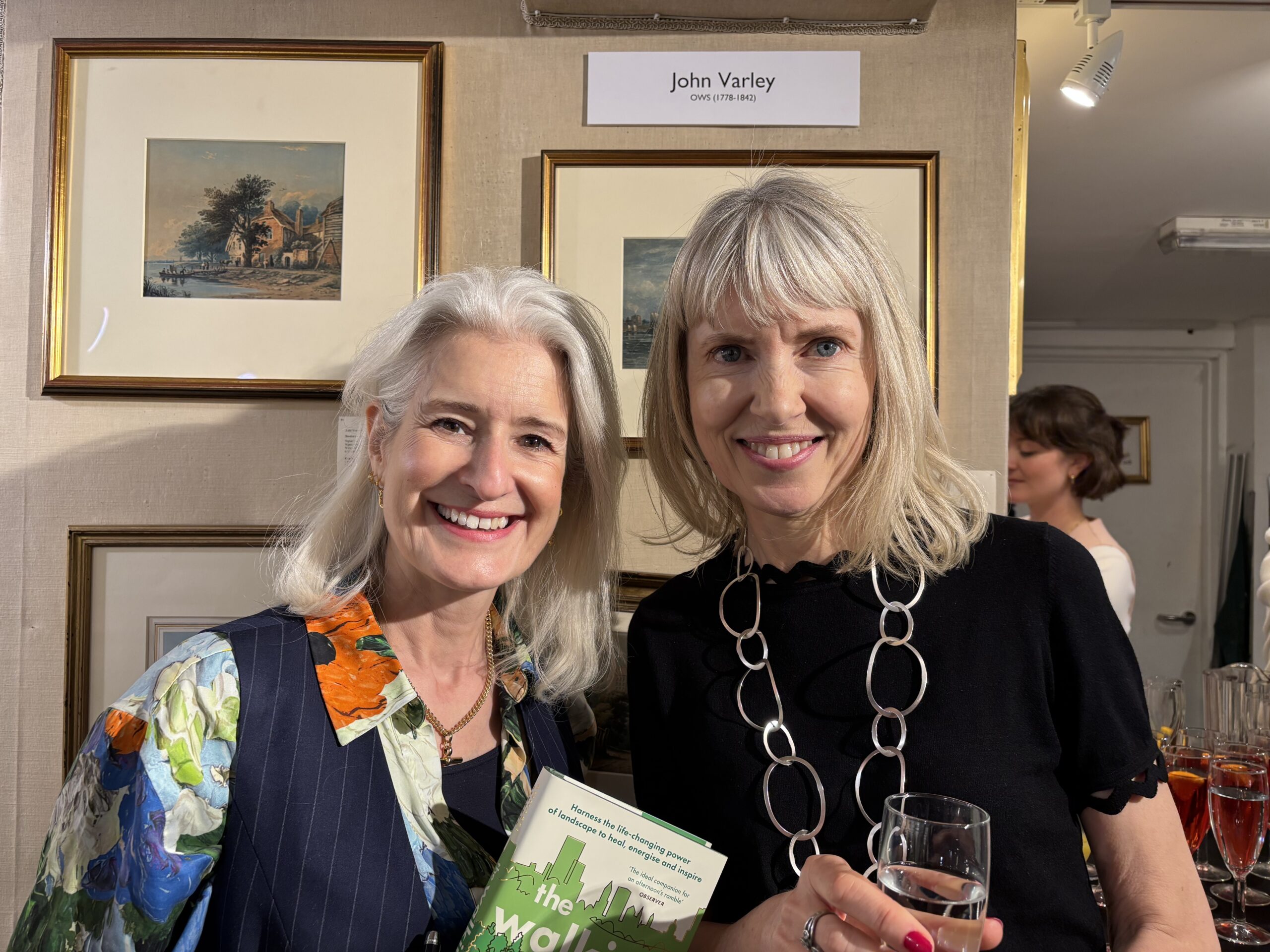
The photo at the top of this post was taken at the launch of Annabel’s latest book, The Walking Cure, this week. It was such a fun and inspiring event, and Annabel spoke with such passion about the power of landscape to positively impact our mental wellbeing. Obviously I’m biased, but do catch her talking about the book if you can.

Upcoming dates include:

Canterbury, Kent, on 5th April at 3.30pm. Click here for tickets and further details 

Chazey Heath, the Chilterns, on 17 May at 1.45pm. Click here for tickets and further details


LUTEOLIN-RICH RECIPES

Vegetable and nettle soup

Roast red onions with rosemary and roquefort

White beans with mushrooms

Kale shakshuka

Simple stuffed peppers (use green ones)

Susan

« THE POWER OF WOODLANDS, WALKING SLOWLY AND YOGURT
HOW TO IMPROVE MEMORY, REDUCE INFLAMMATION, CUT CANCER RISK, AND WHY TRACKING COULD HARM YOUR HEALTH »

Comments

  1. Ione says

    April 4, 2025 at 7:14 am

    Really interesting and i embraced my translucent
    hair at 55, which seems very rare.
    Mental health is is so multifaceted and im a huge
    advocate for walking outdoors.
    I run a Nordic walking group and I can see the huge
    benefit of the poles and walking through the seasons has had.

    Reply
    • Susan Saunders says

      April 6, 2025 at 4:29 pm

      Hello Ione, so good to hear that you’re embracing the translucent hair! Annabel is a huge fan of Nordic walking, I’m going to try it one day!

      Reply
  2. Diana Studer says

    April 17, 2025 at 9:52 pm

    I have always chosen – red orange yellow – peppers for the colour.
    but this time you say – use green ones ?

    Reply
    • Annabel Streets says

      April 18, 2025 at 8:24 am

      Jumping in to say, they are all good! Different chemicals/nutrients according to the colours… go forth and eat all peppers!

      Reply

Leave a Reply Cancel reply

Your email address will not be published. Required fields are marked *

This site uses Akismet to reduce spam. Learn how your comment data is processed.

  • Email
  • Facebook
  • Instagram
  • Twitter

Welcome to The Age-Well Project

Welcome to The Age-Well Project!
Here you’ll find easy changes for a longer, happier life. We’ve immersed ourselves in the science of longevity and distilled the research to make it work in our everyday lives. You can change the way you age: here’s how.

The Age Well Project Book
The Age Well Project Plan
Windswept why women walk
52 ways to walk
the power decade
sleepless
the walking cure

Favourite Posts

WHY I’VE THROWN OUT ALL MY BEAUTY PRODUCTS (nearly…)

Why Alzheimer’s Is A Women’s Issue

HOW HAVING A DOG CHANGED MY LIFE

GREEN SPACE IS GOOD FOR YOUR HEALTH

SUGAR, CHOCOLATE, SADNESS AND BRAIN-BOOSTING BISCUITS

WHY ‘INFLAMM-AGEING’ COULD START IN THE GUT AND HARISSA-ROASTED VEGETABLE SALAD

POLYAMINES – THE NEW SECRET WEAPON FOR AGEING WELL & MOROCCAN SPINACH AND CHICKPEAS.

THINNING AGEING HAIR – WARM CHICKEN LIVER SALAD

About The Age Well Project

This site is for anyone who wants to make the second half of their life as healthy, happy and disease-free as possible. Sign up to get the latest research on ageing – and delicious recipes to match – direct to your inbox.

agewellproject

⭐️Change the way you age
📚The Age-Well Project + Age-Well Plan ⭐️Get tips & recipes on our blog - sign up ⬇️

A really fun evening @putneywaterstones talking ab A really fun evening @putneywaterstones talking about Annabel’s book The Walking Cure and all things Age Well! 💚
We’ve always been a little wary of brain training We’ve always been a little wary of brain training exercises. There’s certainly plenty of them out there. They’re well researched, but the ultimate conclusion is often that they make you really good at playing that particular game with no substantial real-world benefits.
We’d usually rather read a book, play a board game or do a puzzle for a little cognitive sharpening. 

But new research linked specific cognitive training designed to improve speed of processing to a 25% lower risk of developing dementia across 20 years, compared to the control group. 

There’s more on the blog - link in stories and agewellproject.com 

#longevityblog #womeonover50 #braintraining
You’ll have heard that sitting is the new smoking, You’ll have heard that sitting is the new smoking, our sedentary lifestyles are killing us etc etc 

But is all sitting equally bad? it appears not. ‘Active sitting’ - where we’re engaged in a brain-healthy activity like reading or playing stimulating games, doesn’t have the same detrimental impact as slumping in front of the TV. 

It’s what we do when we’re sitting that counts. 

There’s more on the blog - linked in stories 

 #longevityblog #womenover50 #agewell
It is - finally - starting to get a little lighter It is - finally - starting to get a little lighter in the UK. 

But our lives are still full of artificial light, causing our body clocks to drift. The end result? Circadian disruption linked to higher risk of metabolic syndrome, cardiovascular disease, depression, and cognitive decline.

That light-dark imbalance also results in worse sleep and therefore also potentially poorer glymphatic clearance (the brain’s overnight clean up).

But there’s so much we can do to bring light into our lives - at any time of year.

There’s more on the blog - link in stories and agewellproject.com 

And are you enjoying the lighter mornings?! 

#longevityblog #womeonover50 #agewell
Some of our favourite activities - reading books, Some of our favourite activities - reading books, drinking tea, eating cheese (yes, we know how to live!) - have been linked to a longer, better life. 

A new study suggests that cheese  can lower our dementia risk – although no one is quite sure how or why. This new study found that eating 50 grams (1.76 ounces) or more of high-fat cheese a day correlated with a lower risk of developing dementia.

A recent summary  of previous studies which concluded that regular reading improved brain connectivity and function, consolidating neural connections and enhancing brain connectivity, while also improving memory and concentration and slowing down cognitive decline.

And a study published just before Christmas found that tea-drinking protects against osteoporosis.

All good things! There’s more on the blog - linked in stories 

#longevityblog #agewell #womenover50
Follow on Instagram

Contact Us

For any enquiries please email theagewellproject@gmail.com.

Copyright © 2026 The Age-Well Project